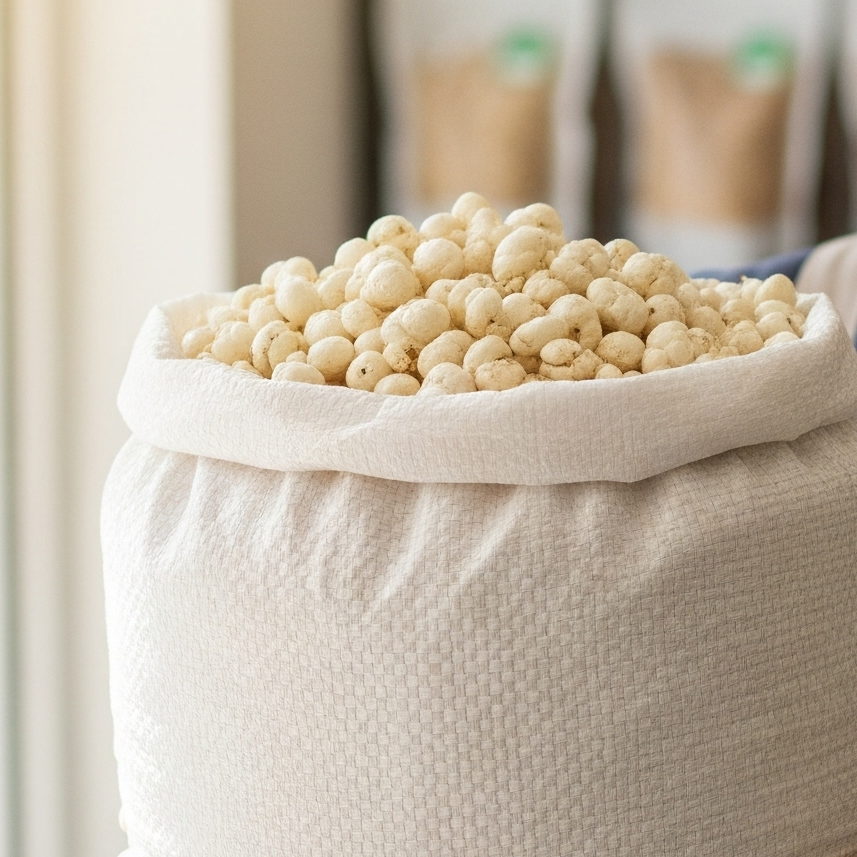
Introduction - Phool Makhana
The global demand for Phool Makhana (Fox Nuts) is exploding. From being a traditional fasting food in India to becoming a globally recognized guilt-free superfood, Makhana is now a staple on supermarket shelves worldwide.
For wholesalers, exporters, and retailers, this presents a massive opportunity. However, it also presents a significant challenge: Quality Control.
As the market expands, so does the influx of subpar produce. If you are sourcing Phool Makhana in bulk, you know that not all "white pops" are created equal. A bad batch defined by small sizes, high moisture content, or hard black shells can ruin your brand's reputation and lead to rejected shipments.
At Mithila FPO, situated in the heart of Bihar—the global hub of Phool Makhana production—we believe an informed buyer is our best customer. We don't just want to sell you stock; we want you to understand what you are buying.
This comprehensive guide will walk you through the technicalities of Phool Makhana grading, visual inspection techniques, and the sensory tests required to ensure you are sourcing only high-quality Phool Makhana for your business.
1. Understanding Makhana Grading: The "Suta" System
In the wholesale Phool Makhana market, quality is primarily determined by size. The traditional measurement unit used by farmers and traders in Mithila is the "Suta."
A Suta is roughly equivalent to 3.175 millimeters (or 1/8th of an inch). When we grade Phool Makhana by Suta, we are measuring the diameter of the popped lava.
Understanding these grades is crucial for pricing and determining the end-use of the product.
The Grades Decoded:
- 7+ Suta (Super Platinum / Export Grade):
- Size: These are the giants of the Phool Makhana world, with a diameter exceeding roughly 22mm+.
- Characteristics: They are incredibly fluffy, have the highest pop-volume, and offer an almost melt-in-the-mouth texture. They command the highest premium price.
- Best For: High-end export markets, gourmet retail packaging, and premium gifting.
- 6 Suta (Platinum / Premium Grade):
- Size: The industry gold standard for high-quality retail. Roughly 19mm–22mm in diameter.
- Characteristics: Excellent round shape, consistent size, and very satisfying crunch. This is the most sought-after grade for quality-conscious domestic brands.
- Best For: Domestic retail brands, supermarkets, and high-quality roasted snacks.
- 5 Suta (Gold / Standard Grade):
- Size: Medium-sized pops, roughly 16mm–19mm.
- Characteristics: Good quality but visibly smaller than the 6 Suta. They are often used for price-sensitive markets or for processing into flour or smaller snacks.
- Best For: Mid-range retail markets, bulk catering, and food processing ingredients.
- 4 Suta & Below (Choti / Murra):
- Size: Small, often irregularly shaped pops.
- Characteristics: These are often the by-products of the popping process. They may be harder or partially popped.
- Best For: Grinding into Phool Makhana powder, animal feed, or very low-cost local markets.
Buyer Tip: When requesting quotes, always specify the "Suta" count. A quote for just "Makhana" is meaningless without the size specification.
2. The 5-Point Visual Inspection Checklist
Once you understand the grades, you need to physically inspect the stock. Whether you are visiting a warehouse or evaluating a sample sent to your office, use this 5-point checklist.
A. The Color Test: Creamy vs. Stark White
Contrary to popular belief, the best Phool Makhana is not startlingly, snow-white.
- High Quality: Should have a natural, creamy white or slightly off-white hue. This indicates natural processing and proper sun-drying.
- Red Flag: If the Phool Makhana is brilliantly, aggressively white, it may have been chemically bleached to hide imperfections or age. Bleached Makhana often has a compromised taste and shelf life.
B. The "Black Cap" (Hard Shell Residue)
This is perhaps the most critical quality defect from a consumer's perspective. The "black cap" is a piece of the hard outer nut shell that sticks to the white pop during the roasting process.
- The Problem: It is rock hard. A consumer biting into a black cap can crack a tooth or ruin their snacking experience.
- The Inspection: Take a handful of Phool Makhana and spread it on a contrasting surface. High-quality stock (6 Suta and above) should be 98-99% free of these black hard spots.
C. Shape and Uniformity
Premium Makhana should be mostly round and spherical. While some natural variation is expected, a batch full of flat, elongated, or crushed pieces indicates poor processing techniques or mishandling during transit. Uniformity is vital if you are packaging the product in clear windows, as customers buy with their eyes first.
D. Surface Texture
Look closely at the surface of the pop.
- High Quality: The surface should be relatively smooth with small, tight bubbles.
- Low Quality: If the surface looks overly porous, spongy, or has large open craters, it indicates that the raw nut was not dried properly before popping. These porous pieces absorb too much oil during roasting and go stale quickly.
E. Foreign Matter
This sounds obvious, but it must be checked. The stock should be free of dust, dirt, hair, jute fibers from sacks, or any other foreign contaminants.
3. The Sensory Test: Crunch and Moisture
Makhana is basically a sponge. Its biggest enemy is moisture.
If you buy Makhana with high moisture content, you are essentially paying premium prices for water weight. Furthermore, high moisture leads to fungal growth (mold) and a very short shelf life.
The "Snap" Test
You don't need fancy equipment to test moisture initially; you just need your fingers and ears.
- Take a single piece of raw (unroasted) Phool Makhana.
- Place it between your thumb and index finger and squeeze hard.
- High Quality Result: It should break immediately with a sharp, audible "snap" or "crunch" sound. It should crumble into powder or small dry shards.
- Poor Quality Result: If it feels spongy, bends before breaking, or flattens without snapping, the moisture content is too high. Do not buy this stock.
4. Why Source Matters: The Mithila Advantage
You can find Makhana traders across India, but the source of 90% of the world's highest quality Makhana is the Mithila region of Bihar.
The unique combination of wetlands, climatic conditions, and generations of specialized farming knowledge in districts like Darbhanga and Madhubani results in nuts that pop bigger and whiter naturally.
The FPO Difference: By sourcing from a Farmer Producer Organization (FPO) like mithilafpo.in, you are securing quality that aggregators often cannot match.
- Traceability: We know exactly which ponds our nuts came from.
- Traditional Processing: Our farmers use time-honored methods of roasting and popping that maximize fluffiness without resorting to industrial shortcuts that damage the nutrient profile.
- Freshness: You are getting stock that hasn't sat in three different middlemen's warehouses before reaching you.
Conclusion
Sourcing high-quality Phool Makhana requires diligence. By focusing on the correct Suta grade, conducting thorough visual inspections for color and hard shells, and performing the crucial moisture snap test, you can ensure you get value for your money.
Your customers deserve the best crunch and the purest taste. Don't compromise on the raw material.
Are you looking for a reliable supplier of 5 Suta, 6 Suta, or Premium 7+ Suta Makhana directly from Bihar?
Contact Us today to request a sample or get a quote for your bulk requirements. Let us help you supply the best to the world.