Introduction - Is Makhana Good for Diabetes? What Science Says ?
For anyone living with diabetes, snacking is a minefield. The fear of a sudden blood sugar spike turns simple pleasures—like munching on something crunchy while watching TV—into a source of anxiety.
Most "diabetic-friendly" biscuits on the market are often hidden traps, loaded with refined flour and preservatives. But what about Makhana (Fox Nuts)? Is Makhana Good for Diabetes?
You’ve probably heard your grandmother recommend it, or seen fitness influencers snacking on it. But as a diabetic, you need more than hearsay—you need facts.
At Mithila FPO, we didn't just want to sell Makhana; we wanted to understand it. Here is what nutritional science says about Makhana and its impact on blood sugar levels.
1. The Glycemic Index (GI) Verdict
The first thing any diabetic looks at is the Glycemic Index (GI). The GI measures how quickly a food raises blood sugar levels.
- High GI (70+): Causes rapid spikes (e.g., white bread, sugary drinks).
- Low GI (55 or less): Digests slowly, leading to a gradual rise.
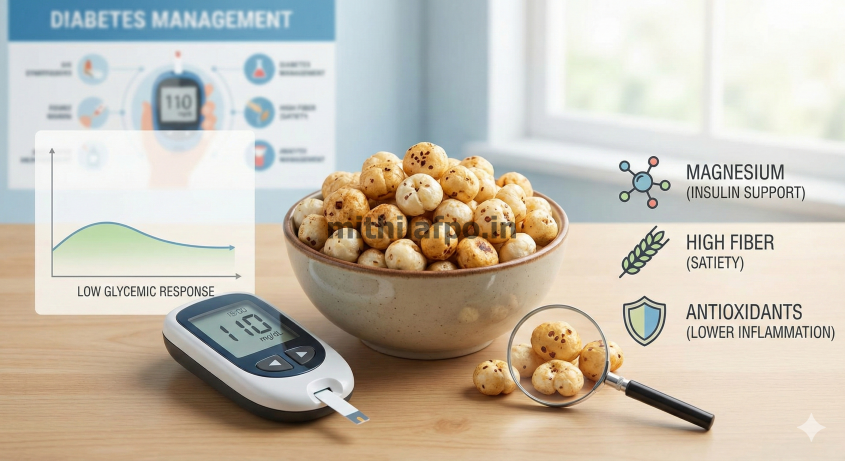
The Science: Multiple studies place Makhana in the Low GI category (typically lower than rice and bread). Because Makhana is a complex carbohydrate, your body takes longer to break it down. This slow digestion prevents the dreaded "sugar rush" and subsequent crash, keeping your glucose levels stable.
2. The Magnesium Factor: Insulin’s Best Friend
If you look at the nutritional profile of Makhana, one mineral stands out: Magnesium.
The Science: Magnesium is crucial for people with Type-2 diabetes. Why? Because magnesium helps your body regulate insulin activity. Low magnesium levels are often linked to insulin resistance (where your cells stop responding to insulin). By snacking on magnesium-rich Makhana, you are essentially feeding your body the mineral it needs to help insulin work more effectively.
3. Fighting Oxidative Stress
Diabetes places the body under constant "oxidative stress," which can lead to long-term complications like heart disease or nerve damage.
The Science: Makhana is rich in specific antioxidants like kaempferol and flavonoids. These compounds hunt down unstable molecules (free radicals) in your body. Regular consumption can help reduce the chronic inflammation often associated with diabetes.
4. Weight Management & Satiety
One of the most effective ways to manage Type-2 diabetes is to manage your weight. This is where the high fiber content of Makhana comes into play.
The Science: Fiber adds bulk to your diet without adding extra calories. A handful of Makhana creates a feeling of fullness (satiety), preventing you from overeating or reaching for unhealthy, high-sugar snacks later in the day.
The "Rules" for Diabetics
While Makhana is beneficial, how you eat it matters. To keep it diabetic-friendly, follow these three rules:
- Portion Control: "Healthy" doesn't mean "unlimited." Stick to 30 grams (approx. 2 handfuls) per day.
- Avoid the "Masala" Trap: Commercial packets often use palm oil and excessive salt. Buy Raw Makhana and roast it at home in a teaspoon of Ghee.
- Don't Caramelize: Avoid Jaggery (Gur) or Sugar-coated Makhana. Even though Jaggery is "natural," it is still pure sugar that will spike your levels.
Conclusion
So, is Makhana good for diabetes? Yes.
Again Asking
So, is Makhana good for diabetes? Yes.
It is low GI, rich in magnesium, and packed with fiber. It is one of the few crunchy snacks that—when eaten in moderation—supports your health goals rather than sabotaging them.
Looking for pure, unadulterated stock? Don't risk your health with processed, fried snacks. Source Premium Raw Makhana directly from the fields of Bihar at Mithila FPO.
So, You've Read Our article "So, is Makhana good for diabetes?" Now You Must Read Our Article on How Makhana can Help Reducing Weight Loss ?
7 Proven Health Benefits of Fox Nuts / Makhana for Weight Loss: Your New Favorite Guilt-Free Snack